Art Catalogs: Build a Living System for Your Collection
A guide to modern art cataloging — why it matters and how to do it right.
TL;DR
Managing art catalogs means creating a centralized, living system to track every artwork's details — images, provenance, purchase history, documents, and location — so collectors can easily organize, value, insure, and manage their collection over time. A well-structured art catalog goes beyond a simple spreadsheet by linking records, storing documents like invoices or certificates of authenticity, and providing a clear, up-to-date view of your entire collection in one place.
Key points:
- Centralize all artwork data (images, artist, title, medium, dimensions)
- Track provenance, purchase history, and valuation over time
- Store and attach documents (invoices, COAs, appraisals)
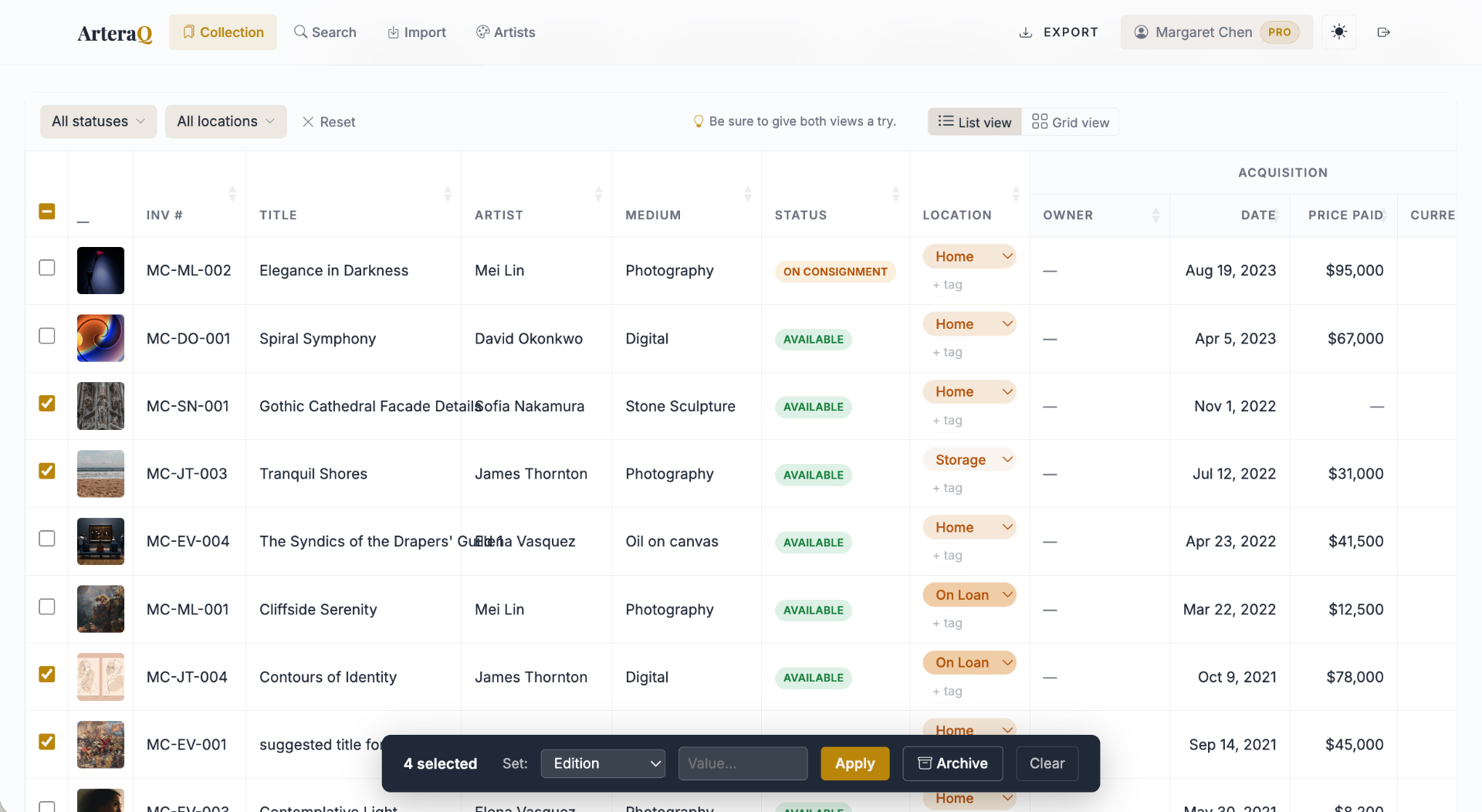
- Organize by location (home, storage, on loan, exhibition)
- Identify missing or incomplete records quickly
- Generate reports for insurance and estate planning
- Maintain a living, up-to-date inventory of your collection
Managing an art catalog is no longer just about keeping a spreadsheet of titles and dimensions. Whether you're a collector, gallery, or artist, your catalog is the core infrastructure of your collection's memory, value, and usability.
A well-built catalog doesn't just list artworks — it connects images, provenance, condition, documents, and history into a single living system. The shift is moving away from static records toward searchable, structured, always-updated archives that grow with your collection.
Why Art Catalogs Matter More Than Ever
At its core, an art catalog is about control and clarity. Without structure, collections become fragmented across folders, emails, and spreadsheets — making it difficult to track ownership, location, or history.
A strong catalog helps you:
- Understand what you own at a glance
- Preserve provenance and documentation
- Track condition and changes over time
- Support insurance, valuation, and sales decisions
- Share curated views with advisors or institutions
Documentation is not just administrative — it's essential for preserving value and context over time.
From Static Lists to Living Catalogs
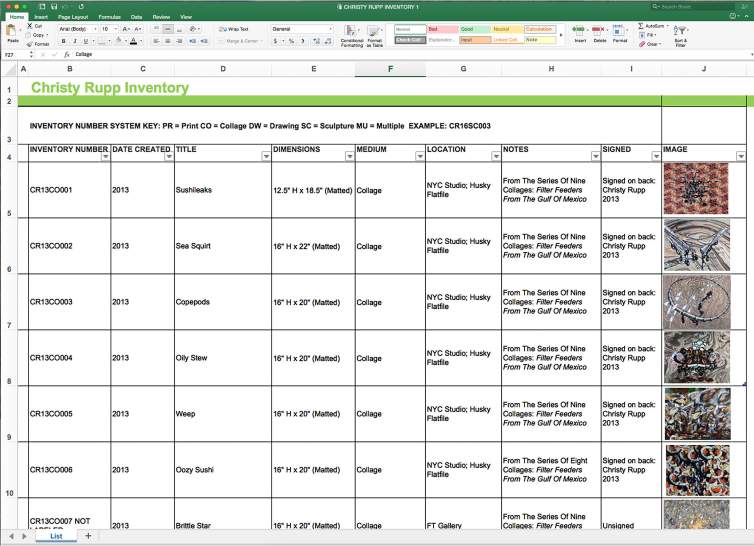
Traditional catalogs were static PDFs or spreadsheets. Today, the best systems treat catalogs as dynamic databases.
Instead of…
- — Separate folders for images
- — Excel sheets for metadata
- — Email chains for provenance
You get…
- → A single record per artwork
- → Linked documents (invoices, certificates, exhibition history)
- → Visual browsing of the entire collection
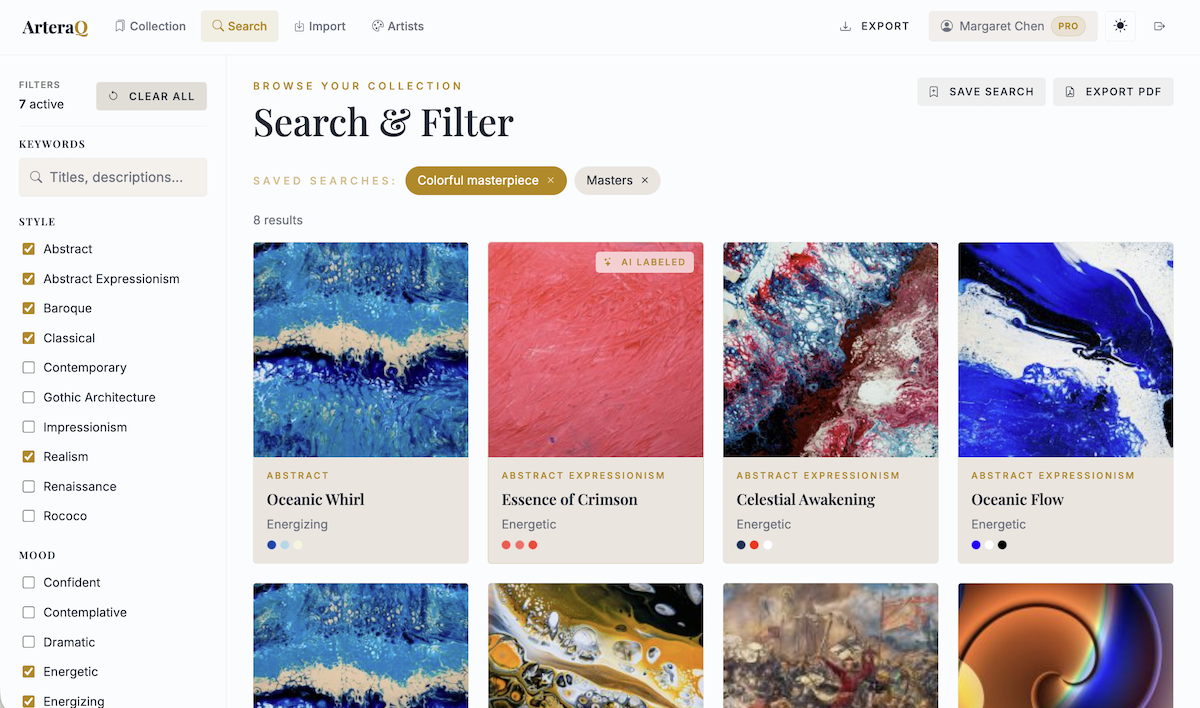
- → Instant search and filtering
What Every Art Catalog Should Include
A useful catalog is built on consistency. Each artwork entry should include:
Core Artwork Data
Title, artist, medium, dimensions, creation date.
Provenance & History
Ownership chain, acquisition details, exhibition history.
Visual Records
High-quality images from multiple angles.
Documents & Attachments
Invoices, certificates of authenticity, condition reports.
Location Tracking
Where the piece is stored, displayed, or loaned.
When structured properly, this information becomes the foundation of everything else — from insurance claims to exhibitions to sales conversations.
The Hidden Cost of Poor Cataloging
Without a structured system, even small collections run into problems:
- Lost provenance over time
- Duplicate or inconsistent records
- Difficulty preparing catalogs or exhibitions
- Slower decision-making during sales or valuation
In contrast, a well-maintained catalog acts as a single source of truth, reducing friction across all collection-related workflows.
Building a Better Catalog System
Modern art cataloging systems focus on a few key principles:
Centralization
All artwork data lives in one place — not scattered across tools.
Flexibility
Collectors, artists, and galleries all structure data differently. Good systems adapt instead of forcing rigid templates.
Connectivity
Every artwork is linked to its documents, history, and context.
Accessibility
Your catalog should be accessible anywhere — not locked in a local file or outdated software.
See It in Action
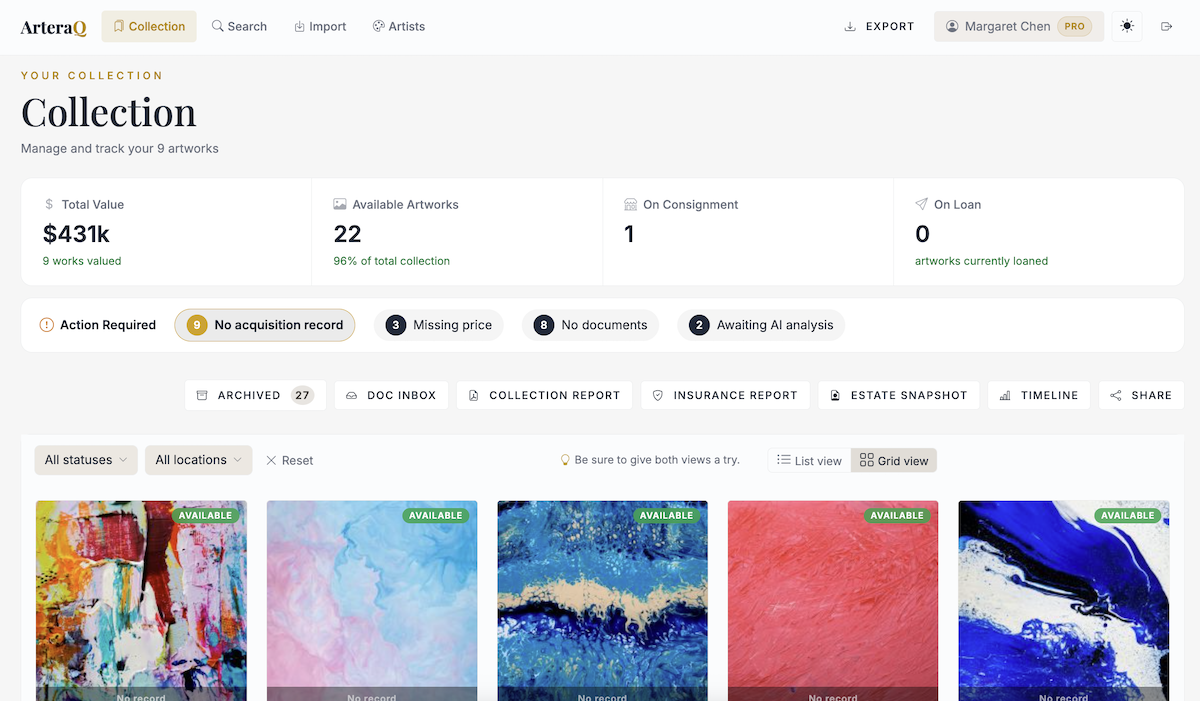
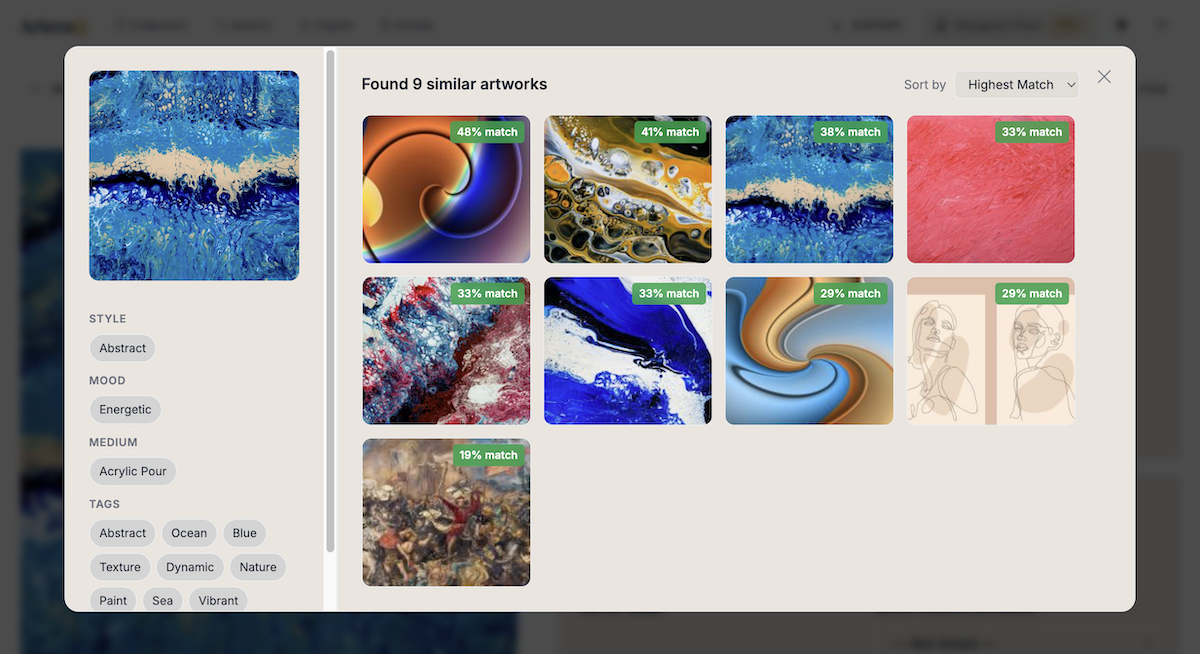
ArteraQ turns these principles into a real, usable system — here's what it looks like:
Final Thoughts
An art catalog is no longer just an inventory — it is the living memory of a collection.
The goal is not just to record information, but to create a system where every artwork is understandable, traceable, and usable at any moment. As collections grow more complex, the value of a well-designed catalog only increases.
In the end, good cataloging isn't about documentation — it's about clarity, preservation, and control over time.